The Complete Guide to Mens Health: What Every Man Should Know

Jason Sellers, MD
Men are less likely to visit a doctor, less likely to talk about symptoms, and more likely to put off care until something feels serious. If that sounds familiar, you are not alone. But the truth is, staying on top of your health does not have to be complicated or time-consuming. A few simple habits and the right support can make a real difference in how you feel now and in the years ahead.

This guide covers the key areas of mens health that matter most, from the numbers you should know to the screenings you should not skip, along with how your Radish provider can help you stay ahead of it all.
Why Men Tend to Avoid the Doctor
Studies consistently show that men are far less likely than women to schedule routine checkups or bring up health concerns with a provider. Some of the most common reasons include feeling like nothing is wrong, not wanting to take time off work, discomfort talking about personal health topics, or simply not knowing what to ask about.
The problem is that many serious conditions, including high blood pressure, high cholesterol, and even early-stage diabetes, often have no noticeable symptoms. By the time something feels wrong, the condition may have been developing for months or years.
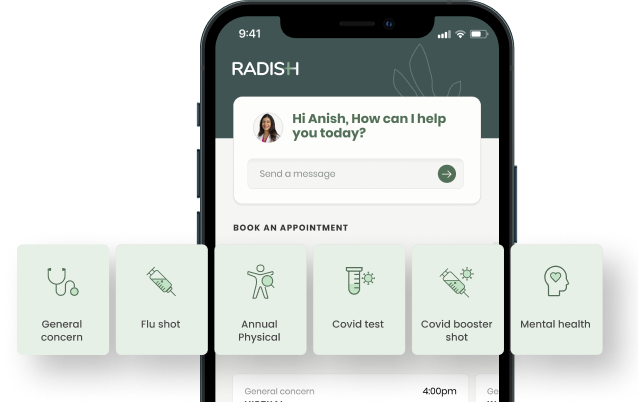
The good news is that getting care does not have to mean sitting in a waiting room for an hour. With Radish, you are paired with a dedicated provider who knows your health history. You can message your care team directly through the app or book a telehealth visit that fits your schedule. Many of our patients tell us it is the first time healthcare has actually felt convenient.
5 Health Numbers Every Man Should Know
You do not need to become a health expert, but knowing a handful of key numbers gives you a clear picture of where you stand. Think of these as your personal health dashboard.
- Blood Pressure: A healthy blood pressure reading is generally below 120/80 mmHg. High blood pressure is one of the leading risk factors for heart attack and stroke, and it rarely causes symptoms on its own. That is why it is sometimes called the “silent killer.” Getting it checked regularly is one of the simplest and most important things you can do.
- Cholesterol: Total cholesterol should ideally be under 200 mg/dL. Your provider will also look at your LDL (the type that can clog arteries) and HDL (the type that helps protect your heart). High cholesterol develops quietly over time, so routine blood work is the only reliable way to track it.
- Blood Sugar: A fasting blood sugar level under 100 mg/dL is considered normal. Between 100 and 125 signals prediabetes, and 126 or above may indicate diabetes. Catching prediabetes early gives you the opportunity to make changes before it progresses.
- Body Mass Index (BMI): While BMI is not a perfect measure on its own, it provides a general snapshot of whether your weight is in a healthy range. A BMI between 18.5 and 24.9 is considered normal. Your Radish provider can help put your number in context alongside other factors like muscle mass, waist circumference, and overall fitness.
- PSA (Prostate-Specific Antigen): PSA is a blood test that can help screen for prostate issues, including prostate cancer. Guidelines vary, but most providers recommend discussing PSA screening starting around age 50, or earlier if you have a family history or other risk factors. Your Radish provider can help you decide when and how often screening makes sense for you.
Not sure where your numbers stand? Your Radish care team can order the right lab work based on your age and risk factors, review results with you, and create a plan if anything needs attention. You can get started with a quick message through the app.
Mens Health After 40: What Changes and What to Watch For
Your 40s are a turning point for your health in several important ways. Many of these changes happen gradually, which makes them easy to overlook. Here is what to be aware of.
Heart Health: The risk of heart disease begins to rise significantly for men in their 40s. This is when blood pressure and cholesterol levels tend to creep up, especially if diet, exercise, or stress have not been well managed. Regular cardiovascular screening becomes essential during this decade.
Metabolism and Weight: Most men notice that it becomes harder to maintain or lose weight after 40. Metabolism slows naturally with age, and muscle mass begins to decline if strength training is not part of your routine. Even small, consistent changes in diet and activity can make a meaningful difference.
Testosterone: Testosterone levels gradually decrease starting around age 30, dropping about 1% per year. By the time you reach your 40s or 50s, you may notice lower energy, reduced motivation, changes in mood, or decreased muscle mass. These are worth bringing up with your provider, as there are both lifestyle and medical approaches that can help.
Prostate Health: Prostate changes are common as men age. Benign enlargement of the prostate can cause urinary symptoms like frequent urination, difficulty starting, or waking up multiple times at night. These symptoms are treatable and worth discussing early rather than waiting until they become disruptive.
Mental Health: Men in their 40s often face a unique combination of pressures, including career demands, family responsibilities, financial stress, and in some cases, caring for aging parents. Depression and anxiety are more common in men than many people realize, and they often show up differently than expected, as irritability, withdrawal, trouble sleeping, or increased alcohol use rather than obvious sadness.
If any of these changes feel familiar, a conversation with your Radish provider is a great place to start. You can book a telehealth visit from wherever you are, and everything is completely confidential. Your provider can run the right tests, talk through what you are experiencing, and help you figure out next steps.
Stress, Sleep, and the Connection Most Men Ignore
Sleep and stress are two of the most overlooked factors in mens health, but they affect nearly everything, from heart health and weight to mood and immune function.
What Chronic Stress Does to Your Body
When stress becomes a constant, your body stays in a heightened state that was only designed for short bursts. Over time, this can contribute to high blood pressure, weight gain (especially around the midsection), weakened immune function, digestive issues, and difficulty concentrating. Chronic stress also increases the risk of heart disease, which is already the leading cause of death among men.
Why Sleep Matters More Than You Think
Most adults need 7 to 9 hours of quality sleep per night, but many men consistently fall short. Poor sleep does more than make you tired. It raises cortisol levels, increases appetite and cravings for high-calorie foods, reduces testosterone production, and impairs decision-making and reaction time. Over the long term, poor sleep is linked to higher rates of heart disease, diabetes, and depression.
Simple Steps That Help
You do not need a complete lifestyle overhaul. Small, consistent changes can have a real impact. Try keeping a regular sleep schedule, even on weekends. Limit screen time in the hour before bed. Cut back on caffeine after the early afternoon. Build in short breaks during the workday to move and reset. Find a physical outlet that works for you, whether that is walking, lifting weights, or playing a sport.
If stress or sleep issues are affecting your day-to-day life, that is something your Radish provider can help with. Whether it is a conversation about what you are dealing with, a review of your sleep patterns, or a discussion about whether further support is needed, your care team is available through the app whenever you are ready to reach out.
A Simple Mens Health Checklist by Age
Preventive care looks different at every stage of life. Use the interactive guide below to explore the screenings, risks, and lifestyle habits that matter most for your age group. Your Radish provider can personalize this based on your health history and risk factors.
Keeping up with this checklist is easier when you have a provider who already knows your history. With Radish, your care team tracks your screenings and follows up with you so nothing falls through the cracks. If it has been a while since your last checkup, start with a message to your Radish provider. It only takes a minute and it could be the most important thing you do for your health this year.
How Radish Makes It Easier
One of the biggest barriers to mens health is access. Finding time, making calls, sitting in waiting rooms, and repeating your history to a new provider every visit adds up. That is exactly what Radish was built to solve.
With Radish, you get a dedicated care team led by a provider who knows you. You can message your doctor directly through the Radish app, with an average response time under two minutes. If you need a face-to-face visit, booking a telehealth appointment takes seconds and fits around your schedule, not the other way around.
Whether you need routine blood work, have a question about a new symptom, want to talk about stress or sleep, or are overdue for a screening, your Radish provider is here to help. No phone trees. No waiting. Just straightforward, quality care when you need it.
If you have been putting off a checkup or have something on your mind that you have not brought up with a provider, now is a great time to start. Reach out to your Radish care team today.
Request a Free Demo
Learn how Radish Health can help you improve employee health and save on healthcare.
Request a Demo